

The crypto sector encompasses a wide range of digital tokens, two of which stand in clear contrast: real-world assets, commonly abbreviated as RWAs, and memecoins. RWAs involve the process of representing traditional financial instruments or physical assets as tokens on a blockchain. Memecoins, by contrast, are digital tokens whose primary value derives from internet culture, community enthusiasm, and speculative trading rather than any underlying productive asset. This article examines the origins, market development, structural differences, risks, and available data on both categories, drawing on figures current as of mid-August 2026.
Origins and Development of Real-World Assets
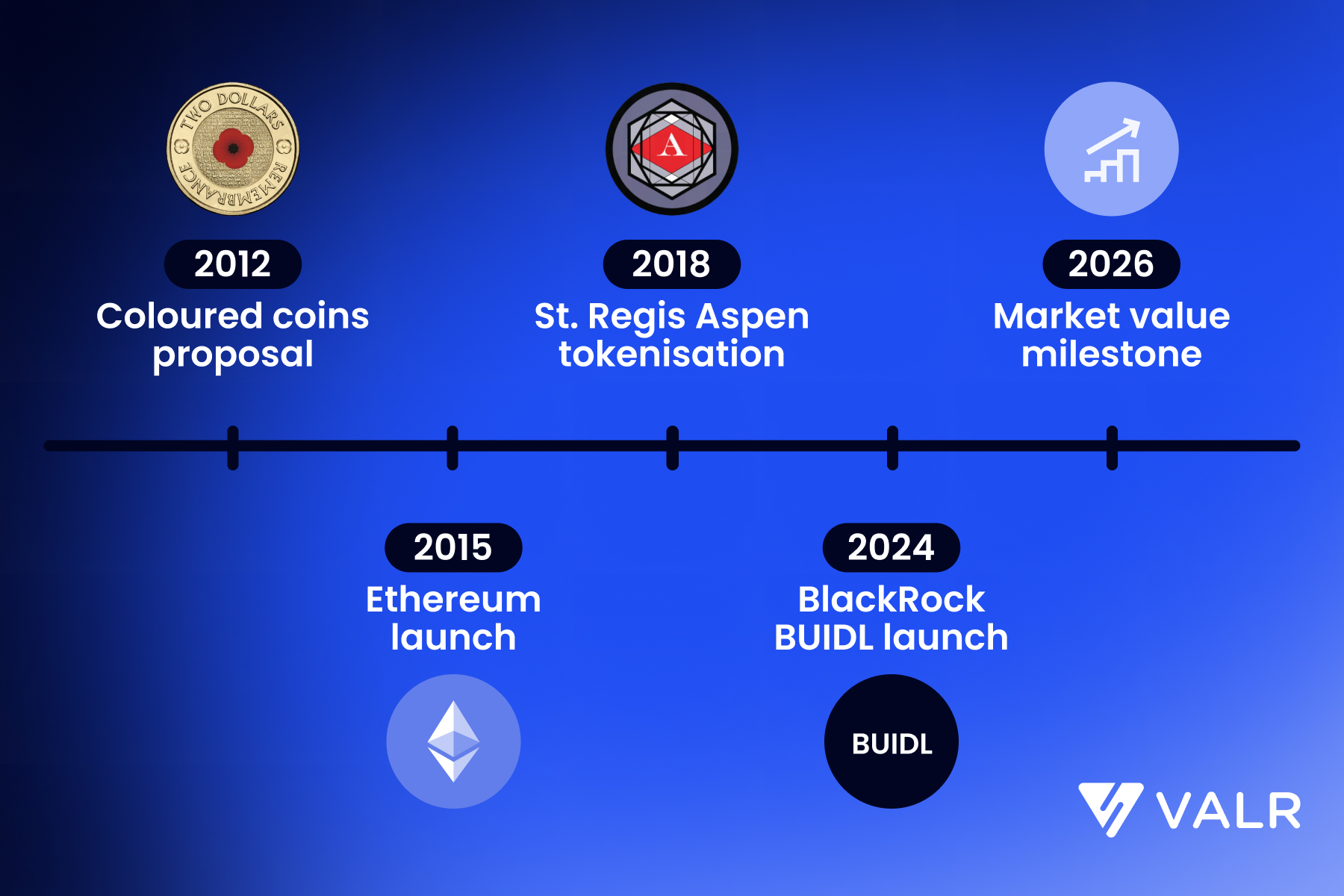
The idea of representing real assets digitally predates modern blockchains. Early experiments in the 1990s included electronic gold certificates, but these systems lacked the decentralised verification that blockchain later provided. On blockchain itself, the concept began to take shape with proposals such as coloured coins on Bitcoin around 2012, which aimed to attach metadata to individual satoshis so they could represent shares or physical items. Mastercoin in 2013 demonstrated an early form of token issuance. The arrival of Ethereum in 2015, with its programmable smart contracts, made more complex representations feasible.
Practical tokenisation of real-world assets began in earnest in the late 2010s. One notable early example was the 2018 tokenisation of an equity stake in the St. Regis Aspen Resort, which raised approximately $18 million under United States Regulation D rules. Other pilots followed in real estate, commodities such as gold, and invoices. Many of these early projects struggled with limited secondary-market liquidity, restricted investor pools limited to accredited participants, and unresolved questions about legal recognition of on-chain ownership.
Progress accelerated after 2020 as stablecoins matured and provided a reliable on-chain settlement layer. Platforms focused on private credit and invoices gained traction. The decisive shift occurred in 2024 when large traditional asset managers entered the space. BlackRock launched its USD Institutional Digital Liquidity Fund, known as BUIDL, in March 2024. The fund holds short-term United States Treasuries and related instruments and issues tokens representing shares. By August 2026 BUIDL held roughly $2.5 billion to $2.7 billion in total asset value according to on-chain trackers. Circle’s USYC and products from Franklin Templeton and Ondo Finance also reached multi-billion-dollar scales. Tokenised Treasuries and money-market funds became the dominant category, followed by private credit and commodities.
By mid-August 2026 the distributed on-chain value of tokenised real-world assets, excluding stablecoins, stood at approximately $38 billion according to RWA.xyz (around $38.1 billion in the days surrounding 19 August). Holder numbers exceeded two million. Broader measures that include represented value reached hundreds of billions. Ethereum hosted the largest share of activity, though other networks such as Solana, Avalanche, and BNB Chain also carried significant amounts. Growth from early 2025 levels of roughly $5 billion to $6 billion represented a multi-fold increase within eighteen months.
Origins and Development of Memecoins
Memecoins emerged from internet humour. In December 2013 software engineers Billy Markus and Jackson Palmer launched Dogecoin as a light-hearted parody of the growing number of serious crypto. The token featured the popular “Doge” meme of a Shiba Inu dog. Initially it functioned mainly as a tipping currency on Reddit. Dogecoin remained relatively obscure for years until 2021, when broader retail interest in crypto and high-profile social-media attention drove its market capitalisation to peaks near $90 billion at one point.
Shiba Inu appeared in August 2020 on Ethereum, positioned as a community-driven alternative with an extremely large supply. It later developed additional tokens and decentralised applications. In April 2023 Pepe launched, drawing on the long-standing Pepe the Frog meme. Unlike some earlier projects that attempted to add utility layers, Pepe relied almost entirely on cultural recognition and trading activity. Subsequent years saw a proliferation of tokens themed around animals, political figures and internet jokes, many launched via simplified platforms that required little technical knowledge.
The sector reached its broadest peak in late 2024, with aggregate market capitalisation estimates ranging from $135 billion to $150 billion. Dogecoin remained the largest single token throughout. By June 2026 the overall memecoin category stood near $30 billion according to available assessments. Around mid-August 2026 (including the period near 19 August) aggregate market capitalisation for the meme category, according to various trackers and reports, was in the mid-20s of billions of dollars range, with further movement later in the month. Dogecoin alone accounted for roughly $11 billion to $12 billion around 19 August, with Shiba Inu and Pepe comprising several billion dollars combined in the same window. The decline from the 2024 high exceeded 80% in several analyses, though classification differences and subsequent volatility affect exact comparisons.
Market Scale and Growth Trajectories
The contrast in scale and trajectory is instructive. Real-world asset tokenisation expanded steadily through 2025 and 2026 even as broader crypto prices fluctuated. Institutional participation, regulatory progress in certain jurisdictions, and demand for on-chain yield products supported the rise. Token Terminal recorded figures around $44.5 billion to $44.7 billion in mid-August 2026 under a somewhat broader methodology, with Ethereum carrying more than half. Private credit and Treasuries formed the core, while tokenised equities grew from negligible levels to several billion dollars in distributed value.
Memecoins displayed far higher cyclicality. Rapid expansions linked to social-media momentum or broader market optimism were followed by steep contractions when attention shifted. Trading volumes and the number of new launches rose and fell accordingly. Many individual tokens lost the large majority of their peak valuations, consistent with the high attrition rate observed among speculative projects.
Projections for real-world assets vary. Standard Chartered has estimated that tokenised real-world assets could reach $2 trillion by the end of 2028 under one scenario, later updating broader tokenised asset forecasts to include higher totals when stablecoins are considered. Boston Consulting Group has previously projected a multi-trillion-dollar market by 2030 under optimistic adoption assumptions. These remain forward-looking estimates rather than guarantees and depend on regulatory clarity, technological infrastructure and sustained institutional demand.
Structural Differences
The fundamental distinction lies in the source of value. Real-world asset tokens represent a claim, often fractional, on an off-chain asset that generates income or holds intrinsic worth. Tokenised Treasuries, for example, track the performance of short-term government debt and may distribute yield. Commodities such as gold tokens are typically backed by physical metal held in vaults. This linkage means price behaviour is influenced by the underlying market rather than solely by token trading dynamics.
Memecoins lack any such claim. Their market price reflects collective willingness to buy and sell, driven by community coordination, social-media visibility and narrative momentum. Supply is frequently very large, which keeps unit prices low and facilitates broad retail participation. Liquidity can appear robust during periods of high interest yet evaporate quickly when sentiment changes.
Participant bases differ correspondingly. Real-world assets have attracted traditional financial institutions seeking programmable settlement, 24-hour accessibility and potential collateral use within decentralised protocols. Compliance requirements such as know-your-customer checks are common. Memecoins remain predominantly a retail phenomenon, although some larger tokens achieve listings on major exchanges.
Secondary-market characteristics also diverge. Real-world asset tokens often face thinner liquidity outside primary issuance and redemption channels, particularly for less standardised assets. Memecoins can experience intense short-term trading volume during viral episodes, yet many smaller tokens trade with limited depth.
Risk Considerations
Both categories involve substantial risks. For real-world assets these include regulatory uncertainty across jurisdictions, questions about the legal enforceability of tokenised claims, custody arrangements for the underlying assets, and the possibility that secondary markets remain underdeveloped. Valuation can diverge between the on-chain token and the off-chain reference if redemption mechanisms are constrained. Performance ultimately depends on the underlying asset class, whether interest-rate movements for Treasuries or commodity price swings for gold.
Memecoins carry risks of extreme price volatility, potential permanent capital loss for the majority of tokens, concentration of ownership among early holders or insiders, and the absence of any productive cash flow. Historical patterns show that most newly launched tokens fail to sustain value after initial attention fades. Market data for the category as a whole can also be sensitive to classification choices by data providers.
Data Limitations and Methodological Notes
Market capitalisation and value figures for both sectors can differ across sources. Trackers of real-world assets distinguish between distributed value (tokens actively held and transferable on public chains) and represented value (broader references that may include assets not fully circulating on-chain). Stablecoins are customarily excluded from core real-world asset totals to prevent double-counting. Memecoin aggregates depend on which tokens are classified as memes and whether fully diluted or circulating supply is used. Figures cited here rely on established public trackers and should be treated as snapshots subject to revision.
Outlook Informed by Available Evidence
Real-world asset tokenisation has moved from experimental pilots to products used by major asset managers. Continued growth will depend on clearer legal frameworks, improved interoperability between chains, and demonstration of reliable secondary liquidity. Memecoins are likely to remain a feature of crypto markets, recurring in cycles of enthusiasm, yet their aggregate size has contracted markedly from prior peaks. The two categories illustrate different uses of blockchain technology: one extends traditional asset ownership into programmable digital form, while the other channels cultural and speculative energy into tradeable tokens. Understanding these distinctions provides a clearer view of how value is currently organised within the broader digital asset landscape.
Risk Disclosure
Trading or investing in crypto assets is risky and may result in the loss of capital as the value may fluctuate. VALR (Pty) Ltd is a licensed financial services provider (FSP #53308).
Disclaimer: Views expressed in this article are the personal views of the author and should not form the basis for making investment decisions, nor be construed as a recommendation or advice to engage in investment transactions.
